Altcoin News
Crypto Altcoin Pain Deepens As Red Monthly Candles Continue To Stack Up

Introduction
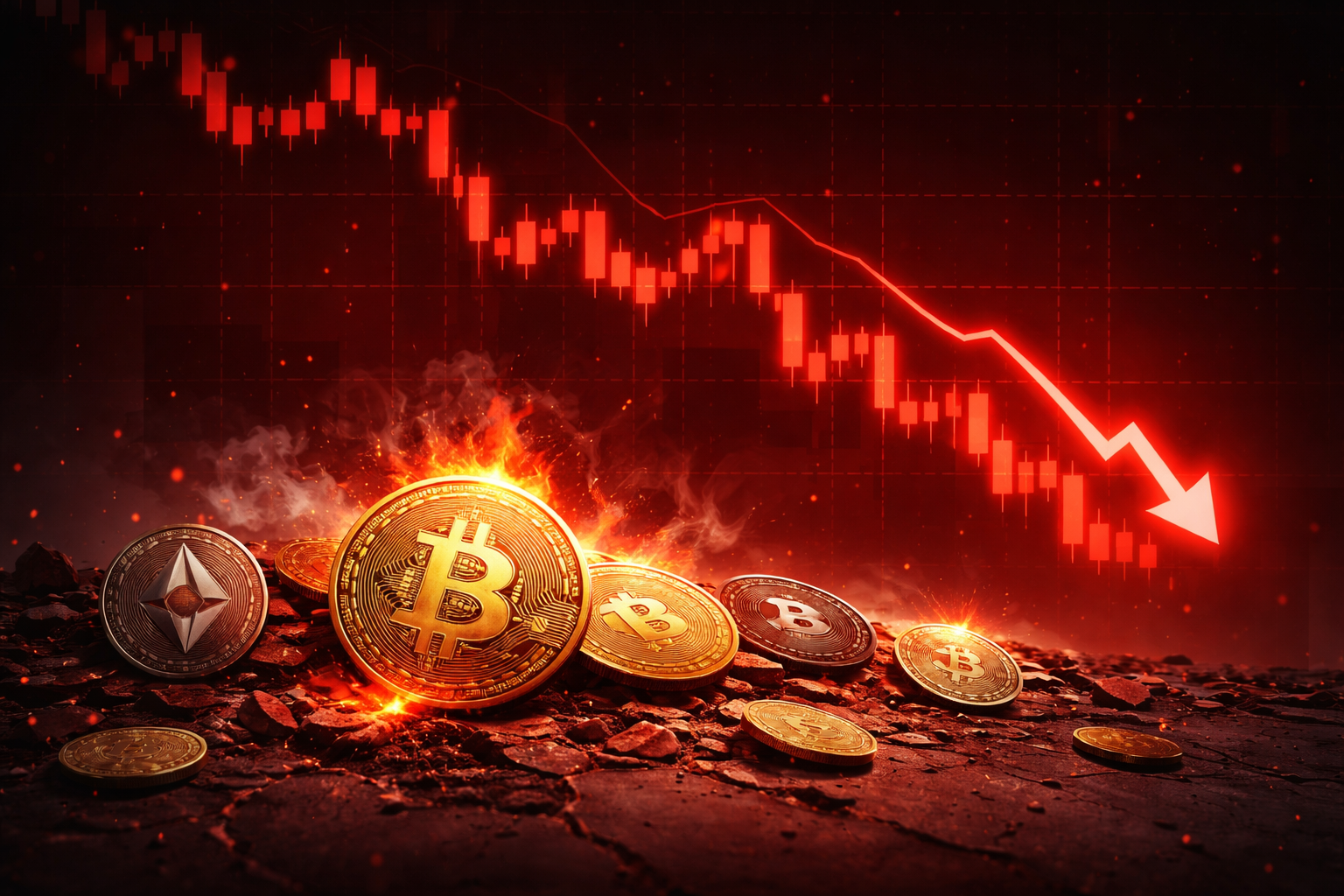
The global cryptocurrency market is experiencing one of its most challenging phases in recent years, and nowhere is the strain more visible than in the altcoin sector. Over the past several months, major alternative cryptocurrencies have consistently closed in the red, forming what traders refer to as “stacked red monthly candles.” This pattern reflects sustained price declines across assets such as Ethereum, Solana, XRP, and Dogecoin. Rather than short-term volatility, the market is now facing a prolonged downturn driven by a mix of macroeconomic pressure, investor caution, and structural changes in how digital assets are viewed. What was once a high-momentum, risk-seeking environment has turned into a period of defensive positioning and widespread uncertainty.
What Red Monthly Candles Really Mean For Altcoins?
In technical analysis, a monthly candle represents the price movement of an asset over an entire month. When the candle closes red, it means the asset ended the month lower than it started. A single red candle can be normal, but when several appear back-to-back, it often signals deep weakness in market structure. For altcoins, these consecutive red months suggest more than just temporary corrections. They indicate that buyers are stepping back, liquidity is thinning, and sellers continue to dominate. This pattern shows that confidence in many altcoin projects has weakened, and investors are not yet willing to re-enter the market in force.
Ethereum, Solana, XRP, And Dogecoin Under Pressure
Ethereum, the second-largest cryptocurrency, has now recorded multiple consecutive losing months. Despite its strong fundamentals and massive developer ecosystem, ETH has struggled to attract sustained buying interest. Solana, once known for explosive rallies, has also faced heavy selling pressure as traders reassess risk in high-beta assets. XRP and Dogecoin, which depend heavily on sentiment and speculative interest, have seen even sharper drops. These assets are not only declining in price but also in trading volume, which signals reduced participation from both retail and institutional investors.
The Role Of Macroeconomic Conditions
One of the biggest drivers of the altcoin downturn is the broader macroeconomic environment. High interest rates, uncertainty around central bank policy, and geopolitical tension have pushed global investors toward safer assets. When money becomes expensive and risk appetite falls, speculative markets like crypto are usually the first to suffer. Altcoins, in particular, are viewed as high-risk compared to Bitcoin or traditional assets, so they experience stronger selling during periods of tightening liquidity. This is why altcoin declines often outpace Bitcoin losses during bearish cycles.
Crypto’s Growing Correlation With Traditional Markets
Another important factor is the increasing correlation between crypto and traditional financial markets. Cryptocurrencies were once seen as uncorrelated assets, but that has changed. As more institutions participate through ETFs and regulated platforms, crypto now behaves more like tech stocks. When equities sell off, altcoins tend to follow. This connection has strengthened over time, meaning that global stock market weakness now directly impacts digital assets. As a result, negative economic news in traditional markets quickly spills over into crypto prices.
Investor Sentiment And Fear In The Market
Sentiment plays a massive role in altcoin performance. Right now, fear dominates. Retail traders who bought during previous rallies are sitting on losses, and many are choosing to exit rather than average down. Social media metrics, search trends, and on-chain behavior all show declining enthusiasm. When sentiment turns this negative, markets often experience extended sideways or downward movement before any real recovery begins. Even strong projects struggle in such an environment because capital simply is not flowing into risk assets.
Liquidity Is Drying Up Across The Altcoin Market
Liquidity is the lifeblood of any financial market, and altcoins are currently suffering from a liquidity squeeze. Trading volumes have dropped, venture funding has slowed, and speculative inflows have decreased. With fewer buyers and less capital circulating, prices fall more easily. Smaller altcoins are hit the hardest because they rely heavily on momentum and hype. Without new money entering the market, many projects face prolonged periods of stagnation or decline.
Regulatory Uncertainty Adds Another Layer Of Pressure
Regulation continues to hang over the crypto market like a cloud. While some regions are moving toward clarity, uncertainty still dominates in many major economies. Investors dislike uncertainty, and when legal frameworks are unclear, large institutions hesitate to commit capital. Even though long-term regulation may benefit the industry, in the short term it creates hesitation and delays investment decisions. This contributes to the overall lack of confidence in altcoins.
Is This A Normal Market Cycle Or Something Bigger?
Crypto markets are known for cycles of boom and bust. Historically, long periods of decline have followed major bull runs. From this perspective, the current altcoin pain may simply be part of a larger market reset. Corrections remove excess leverage, force weaker projects out, and allow stronger ones to survive and rebuild. While painful, these periods often lay the groundwork for future growth. However, the length and depth of the current downturn show how dependent altcoins have become on macro conditions and investor psychology.
What This Means For Altcoin Investors?
For investors, the stacking red monthly candles send a clear message: the market is in a defensive phase. This is not an environment driven by hype and fast profits. It is one where patience, risk management, and selectivity matter more than ever. Many traders are shifting focus from speculative tokens to projects with real utility, strong development teams, and long-term use cases. Others are choosing to stay in stable assets and wait for clearer signs of trend reversal.
Looking Ahead For The Altcoin Market
The future of altcoins depends on several key factors. A shift in global monetary policy, improved economic stability, clearer regulation, and renewed institutional interest could all help restore confidence. Until then, volatility will remain high and sentiment fragile. While some altcoins may eventually recover strongly, others may never return to previous highs. The market is becoming more selective, and survival will increasingly depend on fundamentals rather than hype.
Final Thoughts
The stacking of red monthly candles across major altcoins is not just a technical pattern. It reflects a deeper shift in how investors view risk, liquidity, and digital assets as a whole. The altcoin market is in a phase of correction and reevaluation. While this period is difficult for traders and long-term holders, it is also a moment of transformation. The projects that survive this downturn will likely emerge stronger, more focused, and better aligned with real-world utility. Until then, caution, discipline, and long-term thinking remain essential in navigating the evolving crypto landscape.